
Losing a tooth can feel like a big deal, because it is. Whether it happened suddenly or after years of slow decay, that empty space changes more than just your smile. It can affect how you chew, how you speak, and even how you feel about yourself. But you have excellent options for filling that gap. Two of the most common and effective choices are dental implants and dental bridges.
At the Williamsburg Center for Dental Health, Dr. Stacey Hall sees patients every week who are trying to decide between these two. And the answer isn’t always the same. It depends on your health, your goals, and your unique smile. Let’s break down both options so you can make the choice that’s right for you.
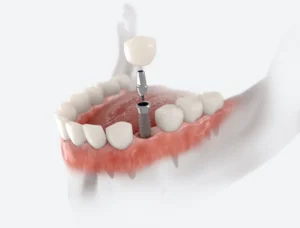
What Is a Dental Implant?
Think of a dental implant as a replacement for the entire tooth, root and all. The implant itself is a small titanium post that Dr. Hall surgically places into your jawbone. Over a few months, that post fuses with the bone in a process called osseointegration. It becomes a permanent part of your jaw. Then, a custom-made crown is attached on top.
You could get a tooth that looks, feels, and functions just like a natural one. You can eat whatever you want and brush and floss normally. And because the implant stimulates your jawbone, it helps prevent the bone loss that happens naturally after a tooth is removed.
Who’s a good candidate? Implants work best for patients with healthy gums and enough jawbone to support the post. If you’ve been missing a tooth for a while, you might need a bone graft first, but that’s something Dr. Hall can discuss with you.
What Is a Dental Bridge?
A dental bridge does exactly what it sounds like. It “bridges” the gap left by a missing tooth. Unlike an implant, a bridge doesn’t replace the root. Instead, it uses the teeth on either side of the gap as anchors. Those teeth are prepared, shaved down slightly, and covered with crowns. The replacement tooth (or teeth) sits in between them, creating a solid, continuous row.
Bridges are a time-tested, reliable solution. They’re typically faster to place than implants and don’t require surgery. If you’re looking for a straightforward fix and the neighboring teeth are healthy, a bridge can be a great choice.
Who’s a good candidate? Bridges work well for patients who don’t have enough jawbone for an implant or who prefer to avoid a surgical procedure. They also require that the anchor teeth are strong enough to support the bridge long-term.
Longevity
Implants are built to last. With good care, many implants stay strong for twenty years or even a lifetime. Bridges typically last ten to fifteen years before they need to be replaced. If you’re looking for a permanent solution, implants have the edge.
Bone Health
When a tooth is missing, the jawbone underneath starts to shrink over time. It’s a natural process, but it can change the shape of your face and make future dental work more complicated. Implants actually stimulate the bone and keep it healthy. Bridges don’t do that; they simply fill the space above the bone.
Oral Health
Impact on other teeth is worth thinking about too. A bridge requires the teeth on either side of the gap to be filed down to support the crowns. Those teeth are permanently altered. An implant, on the other hand, stands on its own. It doesn’t touch or change your neighboring teeth at all.
Timeline
The procedure itself looks different for each option. Bridges are non-surgical and usually completed in just a few weeks. Implants require a minor surgical procedure and a healing period of several months while the bone fuses with the post. Some patients prefer the speed of a bridge; others are willing to wait for the long-term benefits of an implant.
Cost
Implants have a higher upfront investment than bridges. But many patients find that the durability and bone-preserving benefits make them worth the extra cost over time. Bridges are more affordable initially, which can be important if budget is a concern right now.
Restore Your Smile Today
Dr. Hall will walk you through both options during your consultation. She’ll examine your mouth, take X-rays, and help you understand which approach makes the most sense for your health and your lifestyle.
Ready to fill that gap and get your smile back? Call our Williamsburg office to schedule a consultation with Dr. Hall. She’ll help you find the right path forward.